A Residential & Commercial Solar Company
Call 559-310-3564

About solar power

Solar power is usable energy generated from the sun in the form of electric or thermal energy. Solar energy is captured in a variety of ways, the most common of which is with photovoltaic solar panels that convert the sun’s rays into usable electricity.

Solar energy is a clean, inexpensive, renewable power source that is harnessable nearly everywhere in the world. Any point where sunlight hits the surface of the earth is a potential location to generate solar power. And since solar energy comes from the sun, it represents a limitless source of power.

Interested in benefiting from solar power? Solar panels are installed at three main scales: residential, commercial, and utility. Residential-scale solar is typically installed on rooftops of homes or in open land (ground-mounted) and is generally between 5 and 20 kilowatts (kW), depending on the size of a property. Commercial solar energy projects are generally installed at a greater scale than residential solar. Though individual installations can vary greatly in size, commercial-scale solar serves a consistent purpose: to provide on-site solar power to businesses and non-profits. Finally, utility-scale solar projects are typically large, several megawatt (MW) installations that provide solar energy to a large number of utility customers.

For some solar shoppers who may not be able to install solar on their property, community solar is a viable solar option that more directly connects utility-scale solar energy projects to residential consumers. As such, community solar farms are typically built in a central location as opposed to on any single customer’s property. Residential consumers can subscribe to a community solar project to receive many of the benefits of solar power without installing solar panels on their property.

A brief history of solar power

In 1954, Bell Labs developed the first silicon photovoltaic cell. Although solar energy had previously been captured and converted into usable energy through various methods,only after 1954 did solar power begin to become a viable source of electricity to power devices over extended periods of time. The first solar cells converted solar radiation to electricity at an efficiency of 4 percent - for reference, many widely available solar panels today can convert sunlight to solar power at above 20 percent efficiency, a number constantly on the rise.

Although adoption of solar energy was slow at first, a number of state and federal incentives and policies contributed to driving down the cost of solar panels far enough to become more widely adopted. At this point, solar power accounts for enough capacity to power 11 million of the 126 million households in the country.

The cost of solar energy

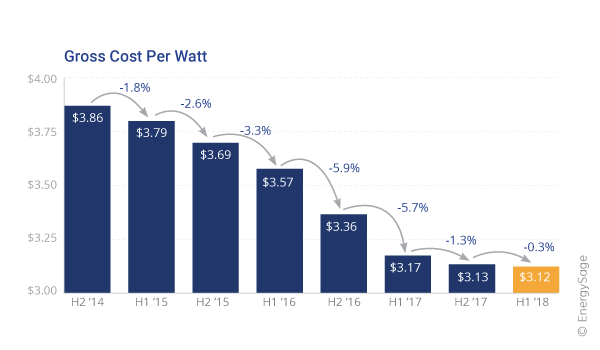
Concurrent with an increase in solar panel efficiency, the cost of solar energy has fallen substantially. In the last decade alone, the cost of a solar panel installation fell over 60 percent, and many industry experts predict that prices will continue to fall in the years to come: